Storyline
Sign in with GitHub

A walkthrough of your pull request

The tests pass. Your review bot has left comments. You still need to understand what you’re merging.

Storyline breaks the PR into one chapter per change, with notes beside the diff.

What am I about to merge?

Read the before and after, see what else the change touches, and get a time estimate for the review.

Where do I start?

Pick a chapter. You get the code for one change, its tests, and a note where a line needs explaining.

Did that hook you in?

If a short video about your code gets you curious enough to reopen the PR after a long day, it’s done its job.


What will the user notice?

Compare what happens when someone takes the same action before and after the change.

Example · Pi PR #11812
Before, quitting during a token refresh could force another sign-in. After, an orderly shutdown waits for pending credential writes.
Blast radius
Credential storage and clients that shut down the session.
Estimated review
About 15 minutes

Which calls have to finish first?

Follow the call across files to see what has to finish before the caller can return.

Which parts of the system does this PR touch?

The architecture diagram groups the edited files by subsystem, so you can see how far the change reaches.

Read one change
at a time.

On GitHub, this PR spans 19 files (+800 / −101 lines). Storyline groups those edits into 4 chapters. Pick a chapter to see its files and explanation.

docs/concepts/compaction.mdpackages/agent-core/src/harness/compaction/compaction-request-scope.test.tspackages/agent-core/src/harness/compaction/compaction.tssrc/agents/sessions/agent-session-compaction-boundary.test.tspackages/agent-core/src/harness/compaction/compaction-provenance.test.tspackages/agent-core/src/harness/compaction/summarization-prompts.tspackages/agent-core/src/harness/compaction/utils.test.tspackages/agent-core/src/harness/compaction/utils.tsconfig/assertion-safety-baseline.txtsrc/agents/agent-hooks/compaction-safeguard-provenance.test.tssrc/agents/agent-hooks/compaction-safeguard.tspackages/agent-core/src/harness/compaction/compaction-cut-point.test.tspackages/agent-core/src/harness/compaction/compaction-cut-point.tssrc/agents/embedded-agent-runner/compaction-session-execution.tssrc/agents/embedded-agent-runner/run.compaction-runtime.test.tssrc/agents/embedded-agent-runner/run/compaction-runtime.tssrc/agents/harness/host-seed.test.tssrc/agents/sessions/agent-session-compaction.tssrc/agents/sessions/compaction/request-budget.ts

The app keeps the ID of the message that started the work. It can still find that message after the conversation is shortened.

Look for the latest instruction in the current conversation. An older task should stay finished.

Record who sent each message so a worker’s progress update can’t be mistaken for a new instruction from the user.

If there’s no instruction left to act on, clear the pending request so the app won’t pick up old work.

Which lines change the behavior?

The heavier + and − marks pick out the edits to read first. The surrounding diff stays in view.

Example · Pi PR #11812
runtime-credentials.ts
The comments have lighter plus signs. The definition of settled and the call to Promise.all have bold plus signs.

What is this line assuming?

A warning names the assumption beside the line that relies on it.

What does this test cover?

Read what the assertion checks while you have the test in front of you.

What is this calculation for?

Read the reasoning beside the formula, then check it against the code.

Watch what changed in your PR.

We made these videos for the end of a long day, when you’ve still got a PR to review and you’d rather watch something.

Sharing with someone who doesn’t read code? Show them an infographic.

Read the full walkthrough

Video beta · Pi PR #11812 · 2 chapters · 2:45 video

Who is this for?

Developers

You’ve got a queue of PRs to review. When the next one touches 19 files, pick one chapter and work through its diff and tests together.

OpenClaw PR #180214 · 19 files in four chapters
  1. Save the starting message ID 8 files
  2. Find the latest user instruction 4 files
  3. Label worker messages 4 files
  4. Remove stale instructions 3 files

Team leads

When someone asks what your team shipped this week, show them what a user can do now. The walkthrough puts the old and new behavior side by side.

Kodan PR #122 · Two-finger zoom
A two-finger gesture zooms the task board out to show more work

Start dragging a task, then put a second finger down. The drag stops and the board zooms. The task stays where it was.

CTOs

Could one of your developers stand at a whiteboard and explain how the system works? Storyline helps developers understand their code deeply, so they stop feeling like guests in their own codebase.

Pi PR #11812 · Why does shutdown wait?
  1. AgentSessionRuntimeTears down the session, then asks the model runtime to wait.
  2. ModelRuntimePasses the wait on to the credential store.
  3. RuntimeCredentialsTracks the pending writes. Once they finish or fail, shutdown can complete.

If the app quits too soon, the old sign-in token may already be spent and its replacement may never reach disk.

Maintainers

Once you merge a contribution, its bugs are yours to maintain. Before you say yes, check which callers could break and whether the regression test covers them.

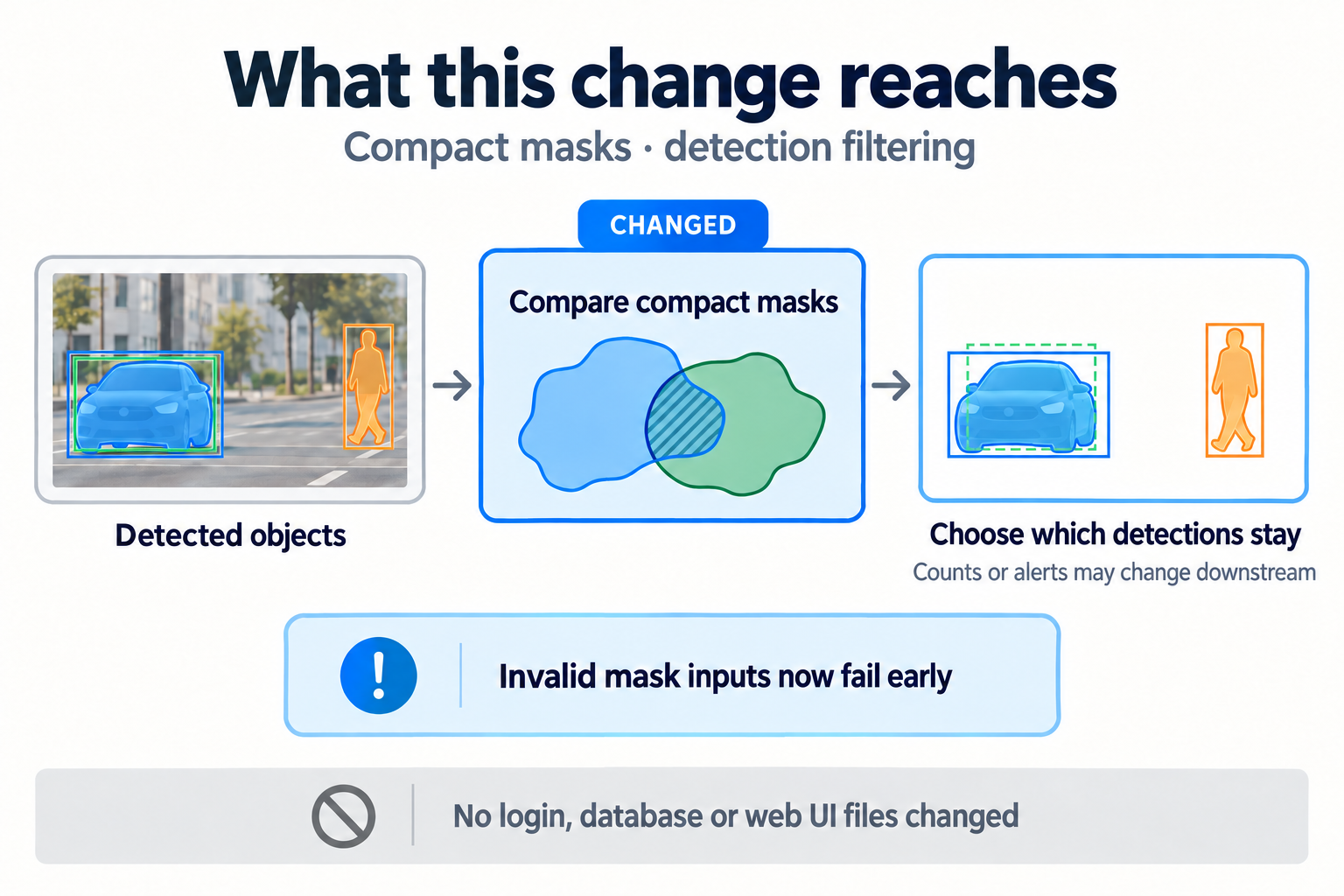
Supervision PR #2767 · Detections kept by the filter
Mask formatBeforeAfter
Dense11
Compact21

Changing the mask format used to change the count. The regression test checks that callers get the same detection either way.

Walk through your own pull request

Free during beta.

Sign in with GitHubContact us
  1. Connect a repositoryYou choose which repositories Storyline can read. Your organization may need to approve the installation.
  2. Pick a PR to reviewChoose an open PR in your workspace or paste its GitHub link.
  3. Set up automatic walkthroughsA repository admin can turn on walkthroughs for new PRs. Storyline posts a link on each one.